
Article 1: The Ultimate Guide to Choosing High-Quality LED Extension Cables and Connectors
In the world of professional LED lighting—whether for kitchen cabinets, high-end wardrobes, or commercial displays—the “invisible” components often determine the success of the project. LED extension cables and connectors are the lifelines of your lighting system. Using the wrong wire can lead to flickering, voltage drops, or even fire hazards.
As a professional manufacturer with 19 years of experience, BOH explains everything you need to know about selecting the right connection solutions for your LED business.
1. Why Cable Quality Matters: It’s More Than Just Copper
Many buyers focus solely on the LED chip or the driver, but the cable is where the power actually travels. A low-quality cable uses Copper-Clad Aluminum (CCA), which has high resistance and becomes brittle over time.
The BOH Standard: Oxygen-Free Copper (OFC)
At our factory, we use 99.9% oxygen-free copper. This ensures:
- Maximum Conductivity: Lower resistance means your lights stay bright from the first inch to the last.
- Durability: OFC is flexible, making it perfect for tight corners in furniture and cabinet installations.
- Safety: High-purity copper generates less heat, significantly reducing the risk of electrical shorts.
2. Understanding Wire Gauge (AWG) and Voltage Drop
One of the most common complaints in the lighting industry is Voltage Drop—when the end of an LED strip is dimmer than the beginning. This is a physics problem that can be solved with the right cable.
The relationship between current (I), voltage (V), and resistance (R) is defined by Ohm’s Law:
V = I * R
If your extension cable is too thin (high AWG number like 24AWG or 26AWG) for a long run, the resistance (R) increases, causing the voltage to drop. For high-power LED strips or long distances, we recommend 20AWG or 22AWG cables to maintain consistent brightness.
3. The Shift to Plug-and-Play: Male and Female Connectors
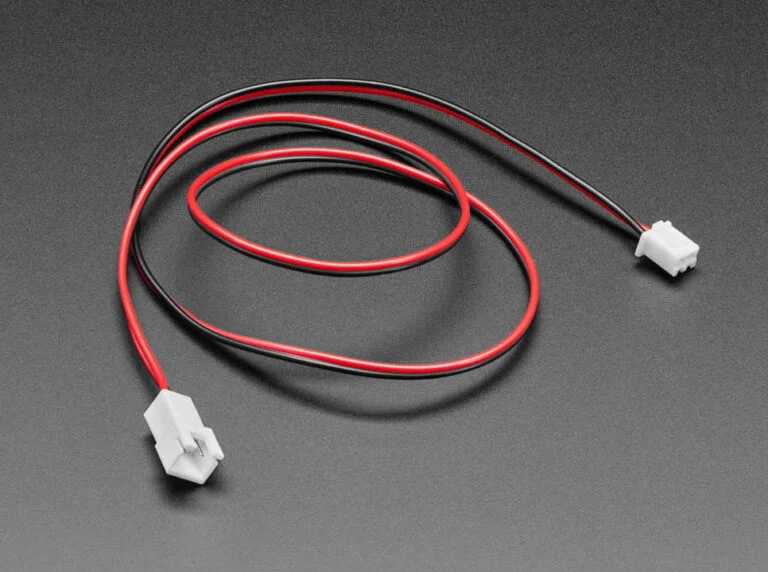
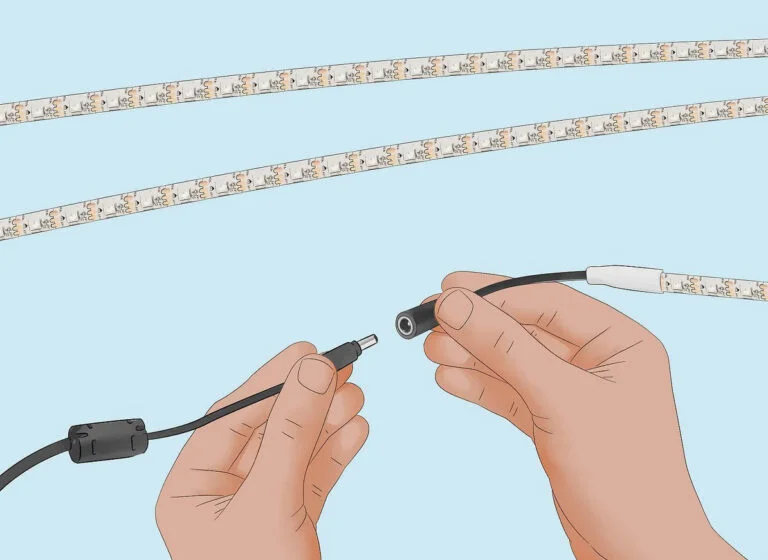
In the past, installers spent hours stripping wires and soldering joints inside dark cabinets. This is no longer efficient. Modern LED solutions rely on Plug-and-Play Male-to-Female connectors.
Benefits of Pre-Assembled Connectors:
- Speed: Reduce installation time by up to 70%.
- Consistency: Factory-molded plugs eliminate the “human error” of poor manual splicing.
- Maintenance: If a driver fails, the end-user can simply unplug it and swap it out without calling an electrician.
4. Insulation and Environmental Protection
Where will your lights be installed? The environment dictates the material of the cable jacket:
- Indoor/Furniture: We use flexible PVC that meets UL and CE standards for flame retardancy.
- Kitchen/Bathroom: High-humidity areas require connectors with silicone seals to prevent oxidation of the metal terminals.
- Commercial/Public Spaces: Many projects now require LSZH (Low Smoke Zero Halogen) cables to meet strict fire safety codes.
5. Why Partner with a Specialized Manufacturer?
When you source from a factory like BOH (Bohuai Electronic Manufacturing Co.,LTD.), you aren’t just buying a wire; you are buying a 19-year legacy of engineering.
We provide:
- Custom Lengths: No more wasting excess wire or struggling with cables that are too short.
- Custom Splitters: 1-to-2, 1-to-6, or even 1-to-10 splitter boxes (Hubs) tailored to your specific cabinet design.
- Rigorous Testing: Every batch undergoes pull-force testing and conductivity checks to ensure zero defects.
Conclusion
Investing in high-quality LED extension cables and splitter boxes is the best way to protect your brand’s reputation. Don’t let a $0.50 cable ruin a $500 lighting installation.
Are you looking for a reliable OEM partner for your LED connection needs? [Contact BOH today for a custom quote and samples.]